 Fairways
 The Other Bag on a Golf Trip: Why I Switched From Two Wheels to Four
The ClubGlider handles the clubs. Everything else, the clothes, the shoes, the rain gear, rides in a rollaboard. After returning two new bags and keeping a third, here's what actually changed my mind on wheel count.
Disclosure: Fairways and Miles may earn a commission from qualifying purchases made through links on this page, including Amazon links, at no additional cost to you. We only recommend what we'd put in our own bag or carry-on. Our editorial opinions are our own.
I've flown with a two-wheel rollaboard for years and never thought twice about it. Then I went through three new bags in one Prime Day sale, returned two of them, and ended up somewhere I didn't expect: on the four-wheel side of the argument, with real reservations I didn't have going in.
The ClubGlider gets the clubs to the course. This is about the bag that carries everything else on a golf trip, the clothes, the extra shoes, the rain gear, the thing you're wheeling alongside the clubs through the same terminal.
What I bought, and what went back
I already own a TravelPro MaxLite 5 in the 20-inch international carry-on size, a two-wheel bag, and it's been a fine travel companion for years. I wanted to see whether a four-wheel spinner would actually be worth switching to for the bigger, checked side of a golf trip, so this Prime Day I bought three candidates: a Level8 hardside spinner, a TravelPro MaxLite Air V2, and a full-size TravelPro MaxLite 5 in the softside spinner build.
Two came right back. After going through everything I could find comparing the three, I returned the Level8 and the softside MaxLite 5 and kept the MaxLite Air V2. First trip is in the books with it, and I'm pretty happy, but "pretty happy" comes with three specific complaints that nobody's marketing copy mentions.
What four wheels actually cost you
The MaxLite Air V2 is a clamshell design, and that alone was worth the switch: it opens flat like a suitcase rather than top-loading, and it fit more than I expected on its first real trip. That part exceeded what I was expecting going in.
The wheels are where the tradeoff shows up.
| Two-wheel (my old MaxLite 5) | Four-wheel (the Air V2) | |
|---|---|---|
| Curbs and rough pavement | Rams straight over them, no adjustment needed | Small wheels catch on big ramps and obstacles; you feel every one |
| Rolling on smooth terminal floor | Fine, one hand, drag it behind you | Effortless, glides beside you with one finger |
| Balance while rolling | A non-issue, it just follows you | Takes real adjustment; it wants to tip if you're not squared up over it |
| One-handed operation | Yes, always | Not really, see below |
That balance column is the part that took me by surprise. A four-wheel bag doesn't drag behind you the way a two-wheel bag does, it rolls alongside you and wants to stay upright on its own, which sounds like less work until you hit a bump or a slope and have to actively correct it rather than just muscling through like a two-wheeler lets you do.
The handle placement problem nobody mentions
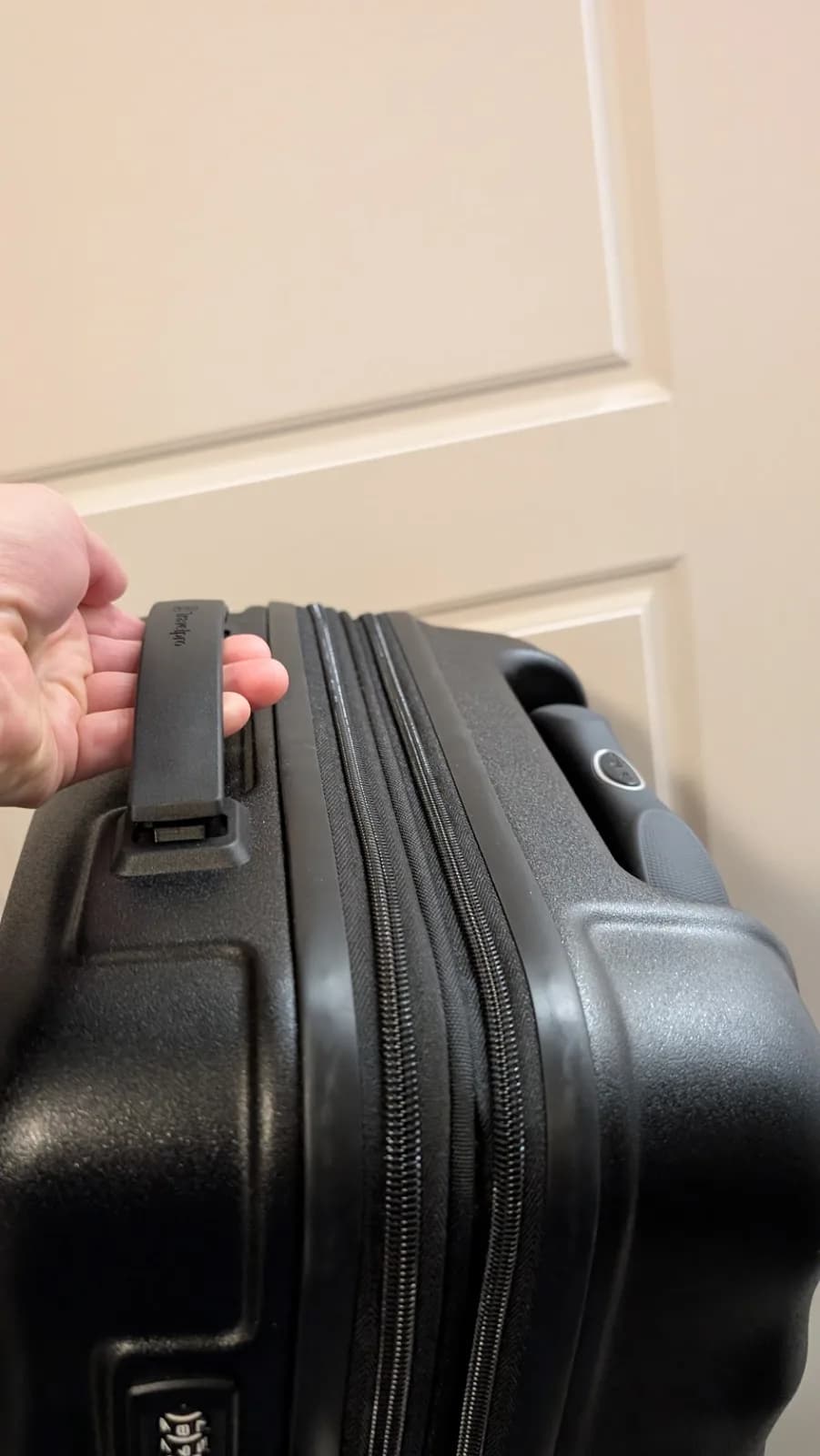
My specific complaint with the Air V2, and I'd guess with most four-wheel spinners built the same way: the telescoping handle, the one with the retractable bar you roll the bag by, is anchored right where it should be, at the edge. The top carry handle is the one that's off. The case opens as a clamshell, a 50/50 split down the middle, so the top handle has to sit on one half of that split instead of dead center, opposite the telescoping handle rather than directly over the bag's balance point.
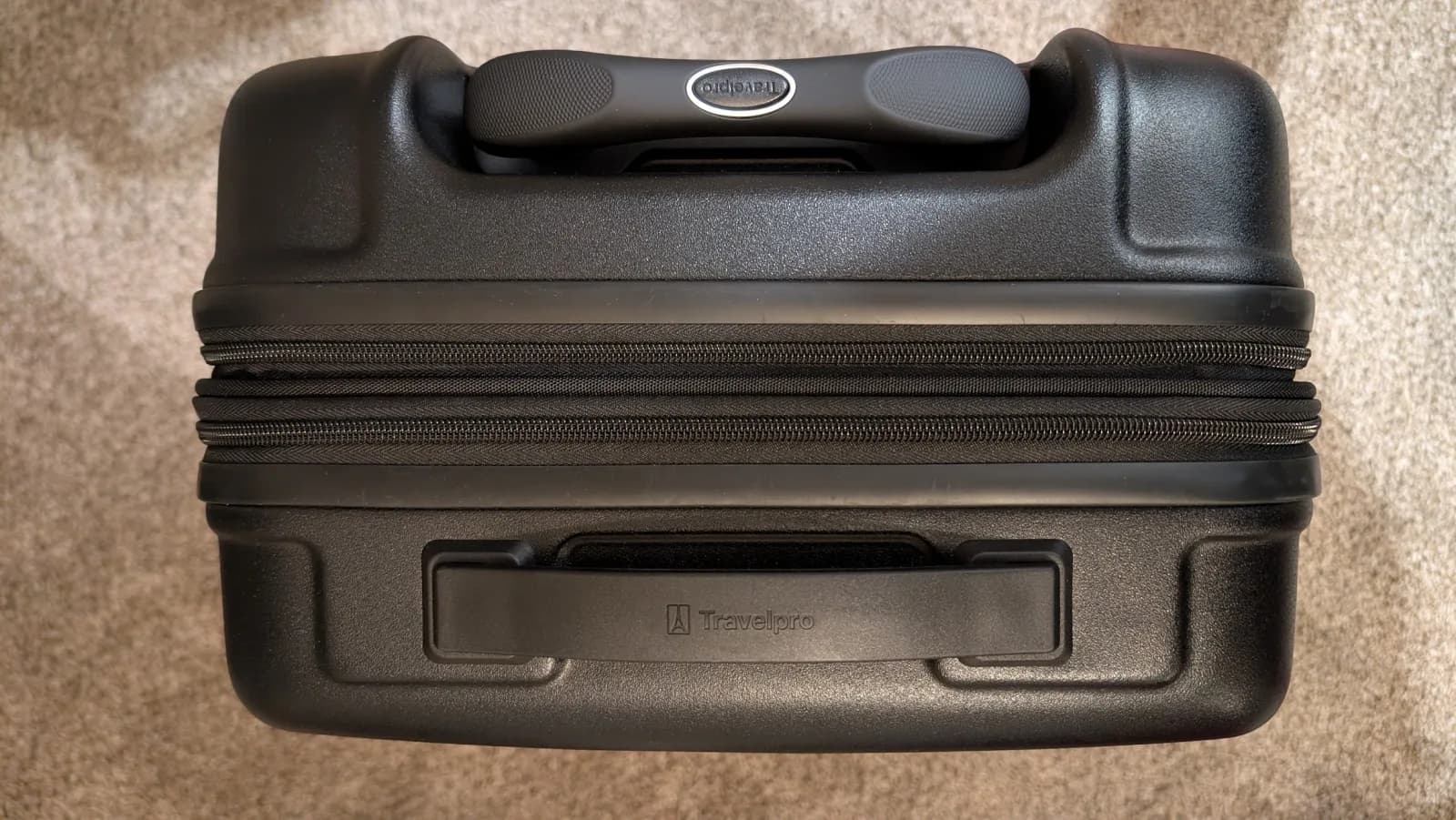
That's not a rolling problem, it's a carrying one. Grab the bag by that top handle alone, lifting it off a curb, into a trunk, up a flight of stairs, and it doesn't hang straight. It tips at an angle. Grab both handles at once instead, the top handle and the telescoping handle together, and it levels right back out. It's a function of the clamshell design, not a defect, and it's not a dealbreaker. It's still, genuinely, a little inconvenient to need two hands just to carry the thing level, on top of the separate adjustment the wheels themselves ask for while rolling.
Who should actually switch
If most of your golf-trip travel is smooth terminal floors, rental-car garages, and hotel lobbies, a four-wheel bag is the easier bag to live with day to day, and the clamshell packing layout is a real upgrade if you're comparing it against an older top-loader. If your trips involve a lot of curbs, gravel club parking lots, or uneven ground between the car and the clubhouse, a two-wheel bag still wins on the parts of a trip where a spinner's small wheels struggle, and it never asks for a second hand to stay balanced.
I'm keeping the Air V2. I bought it on Prime Day for $96, and between the clamshell packing and the effortless glide across normal airport floors, it earned the switch even with the balance and handle complaints. I've officially joined the four-wheel club. I just went in expecting an upgrade with no downside, and there's a real downside, so budget for a slightly more careful walk from the curb to the gate.
The MaxLite Air V2 line is on Amazon if you want to compare it against your own two-wheel bag before your next trip.
Pack the clubs with the ClubGlider, pack everything else with whichever wheel count actually matches your trip, and see the golf talk section for the rest of what goes into planning the trip itself. If you want the next gear breakdown like this one in your inbox, subscribe to the 19th Hole.
Quick answers
- Is a four-wheel spinner bag better than a two-wheel bag for a golf trip?
- It depends on the terrain more than the marketing. A two-wheel bag rolls straight over curbs and rough pavement without changing your grip. A four-wheel spinner glides easily on smooth floors but needs a steadier hand over ramps, curbs, and anything uneven, and its top carry handle usually isn't centered either, so lifting it by that handle alone tips it at an angle instead of hanging straight.
More in Golf Talk
Two Things to Check Before You Post a Score From a Course You've Never Played
One decides what your handicap becomes for the day. The other decides whether the round can be posted at all. Here's the difference between the two, and how to run both checks before you reach the first tee.
Golf Talk · 2026-09-28

Is Your Driver Still Legal? The Conforming Club and Ball Lists, Explained
The USGA and The R&A publish a running list of exactly which driver heads and golf balls are tournament-legal, and it changes every week. Here's how the list works, what happens if your equipment falls off it, and how to check your own bag in two minutes.
Golf Talk · 2026-09-14
What's Actually in My Golf Bag Right Now
Every club, shaft, and glove I'm carrying this season, why each one earned its spot, and what's already on the replacement list.
Golf Talk · 2026-08-31